
Videos of people freediving with whales have become increasingly popular online. Watching a diver glide through the water beside one of the ocean’s largest animals can look peaceful, even magical.
But whales are not just beautiful marine life — they are protected wildlife, and interactions with them should always prioritize their safety and well-being.
Around the world, marine scientists and responsible whale watching operators emphasize one simple principle: observe whales without disturbing them.
Why Whales Need Space
Whales may appear calm and slow-moving, but they are powerful animals capable of sudden movements. Even a gentle flick of a whale’s tail can move thousands of pounds of water.
More importantly, close human interactions can stress whales or disrupt important behaviors, including feeding, migration, and caring for calves.
In the United States, whales are protected under the Marine Mammal Protection Act, which prohibits harassment or disturbance of marine mammals in the wild. These regulations help ensure whales can continue their natural behaviors without interference.
Because of this, responsible wildlife viewing focuses on watching whales from a respectful distance rather than interacting with them directly.
The Reality of Freediving With Whales
The idea of freediving with whales can seem appealing, especially after seeing dramatic underwater footage online. Freediving allows people to move quietly through the water without bubbles or noisy equipment.
However, whales are still wild animals. Their enormous size and strength mean even accidental contact could be dangerous for both the whale and the diver.
Whales also rely heavily on sound and communication. Sudden human presence in the water can potentially disrupt these behaviors.
For these reasons, most marine wildlife experts encourage people to observe whales rather than attempt to swim with them.
Freediving With Killer Whales
Some videos show divers freediving with killer whales, also known as orcas. Orcas are among the most intelligent marine mammals and are known for their complex social structures and cooperative hunting strategies.
Although there are very few recorded cases of wild orcas harming humans, they remain powerful apex predators capable of incredible speed and agility.
Orcas can swim over 30 miles per hour and communicate through sophisticated vocalizations within their pods. Interactions with them should always prioritize their natural behavior and space.
Freediving With Sperm Whales
Another species sometimes featured in underwater encounters is the sperm whale.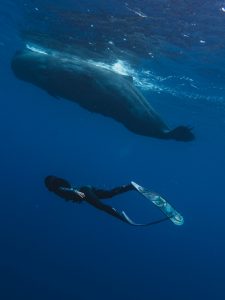
Freediving with sperm whales has captured public attention because these animals are known for their calm demeanor and curious nature. Sperm whales are also famous for their deep dives, reaching depths of more than 3,000 feet while hunting giant squid.
Despite their generally peaceful reputation, sperm whales are still enormous animals. Adult males can reach lengths of over 50 feet, and their powerful tails can create strong currents in the water.
For both safety and conservation reasons, close human interaction should always be approached with caution.
The Best Way to Experience Whales
One of the most incredible ways to experience whales is simply by observing them in their natural environment.
Along the Southern California coast, species like blue whales, humpback whales, gray whales, and orcas migrate through local waters each year. Watching one surface nearby or seeing a massive tail rise above the ocean can be an unforgettable experience.
By observing whales respectfully and responsibly, we help ensure these animals continue thriving in the wild for generations to come.
Ready for an adventure? Check our Latest Sightings Report to see if orcas have been spotted today, or Book Your Trip to join us on the water!